
UK | Algeria
- christiankumar4
- 2 days ago
- 2 min read
Algeria is quietly emerging as one of the most under-recognised innovation markets on Europe’s doorstep — and the strategic fit with the UK, particularly the Midlands, is stronger than most realise.
With a population of over 45 million and a median age of ~28, Algeria has a young, technically capable workforce increasingly focused on engineering, AI, and applied sciences. The government has accelerated this shift through startup legislation and tax incentives, with more than 5,000+ startups now registered under national programmes. At the same time, internet penetration has surpassed 70%, creating a scalable digital foundation for healthtech, fintech, and industrial innovation.
What makes Algeria particularly compelling is not just growth — but adjacency.
The UK imports over £60bn in goods annually from emerging markets, yet North Africa remains underpenetrated in structured innovation partnerships. Meanwhile, the Midlands remains one of the UK’s most powerful but under-leveraged clusters for medtech, advanced manufacturing, and clinical development — with over 1,000 life sciences businesses and a strong NHS integration environment.
This is where execution matters.
At MedTech Makers Lab (MML) and Capital Kinetics, we see a clear bilateral opportunity:
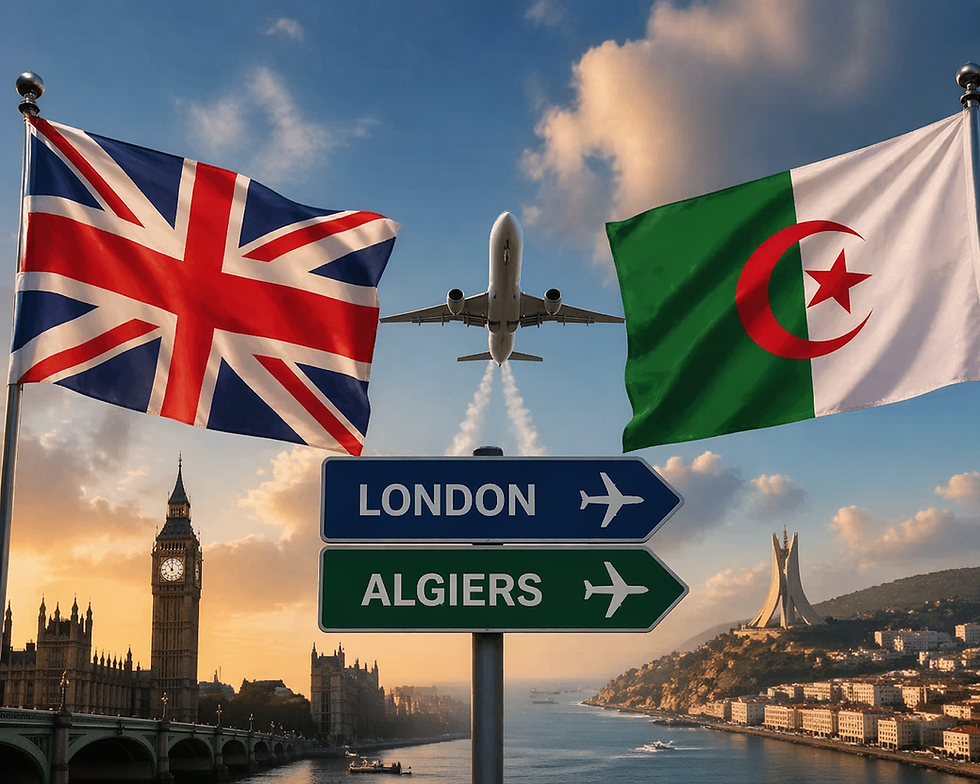
• Algeria → UK:Supporting high-potential Algerian innovations to access UK regulatory pathways (MHRA), clinical validation, and structured capital markets
• UK → Algeria:Enabling UK companies to enter a fast-growing, cost-efficient market with strong demand for healthcare, infrastructure, and industrial technologies
• Joint Development Model:Building UK-domiciled entities, aligning IP structures, and scaling ventures through cross-border clinical, commercial, and funding frameworks
This is not theory — it is a structural arbitrage.
Lower development costs in Algeria combined with UK validation and capital access can reduce early-stage burn by 30–50%, while accelerating time to market through coordinated regulatory and clinical strategies.
At a time when capital efficiency and global scalability are critical, bilateral corridors like Algiers ↔ Birmingham are not just interesting — they are necessary.
The next phase of innovation won’t be built in silos.It will be built across borders, with aligned ecosystems, structured capital, and execution partners who understand both sides.
We are actively building this corridor.
If you are an investor, founder, or institutional partner looking to access this opportunity,
now is the time to engage.


Comments